
In Defense of Jim Steinman…
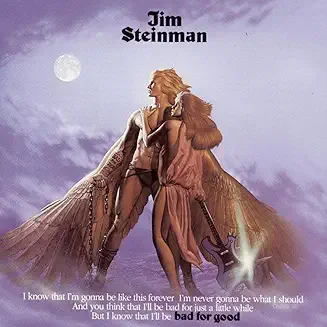
In Defense of Jim Steinman, Who Wrote the Biggest Songs You've Ever Heard and Meant Every Single Word of Them
There is a particular kind of critical dismissal reserved for artists who commit too fully to their vision — who refuse to hedge, to understate, to protect themselves with irony — and Jim Steinman received it for his entire career. The critique, reduced to its essence, goes like this: too much. Too operatic. Too long. Too bombastic. All style, no substance. A gifted melodramatist who mistook volume for meaning.
This critique is wrong in a way I find genuinely instructive, because the people making it have defined "substance" so narrowly that they've accidentally excluded most of Western art from the conversation.
Let's establish the terms. Jim Steinman was a composer, lyricist, and producer who emerged from the Actors and Directors Lab in New York, where he developed Neverland — a rock musical based on Peter Pan that treated adolescence not as a charming phase but as a war, a reckoning, a state of being that the adult world actively conspires to destroy. This was his foundational text. Everything that came after it — the motorcycle as Pegasus, the endless night drives, the love that arrives like a natural disaster and leaves the same way — came from that specific, fully-formed, completely serious artistic vision. The boy who won't grow up is not a cute metaphor in Steinman's hands. It is a tragedy. It is a choice with consequences. It is, if you're paying attention, a fairly sophisticated argument about what we lose when we agree to become reasonable.
The style-versus-substance argument collapses the moment you ask what, exactly, the substance of a Steinman composition is. Take Bat Out of Hell — the song, not the album, though the album too. It is six minutes of a man describing a motorcycle crash in apocalyptic terms that escalate so far past realism they come out the other side into something mythological. The style IS the substance. The excess is not decorating a meaning; the excess IS the meaning. That this is how it feels to be young and reckless and alive and terrified of not being those things forever — that the appropriate artistic register for that feeling is not a tasteful acoustic guitar but a full orchestral rock assault that lasts longer than most people's commutes — is not a failure of proportion. It is proportion. It is exactly the right size for what it is describing.
Steinman understood Wagner. This is not a casual influence — it is a structural one. The Wagnerian leitmotif, the through-composed drama, the idea that music should not illustrate emotion but be emotion at full scale — these are the bones of everything Steinman built. When people say his songs are too big, they are essentially saying that Wagner is too big, that Greek tragedy is too big, that the entire tradition of art that takes human feeling seriously enough to match its actual dimensions is too big. They are welcome to that position. It is a small position, and they are welcome to it.
His range beyond Meat Loaf is the other thing his critics tend to ignore, probably because it complicates the narrative. Bonnie Tyler's Total Eclipse of the Heart is one of the most recognizable songs of the twentieth century — a gothic fever dream about desperate love that somehow became a global phenomenon despite being approximately eight hundred percent more intense than anything else on the radio in 1983. Celine Dion's It's All Coming Back to Me Now is a ten-minute operatic breakup song that went to number one. Sisters of Mercy, Barry Manilow, Pandora's Box — Steinman wrote for everyone, and what he wrote for everyone was, always, enormous and strange and specifically his. There is no mistaking a Steinman composition for anyone else's work. That is not a small achievement. That is the definition of a singular artistic voice.
Now. The political question, and the Meat Loaf question, which are related.
Meat Loaf — born Marvin Lee Aday — was a Trump supporter. He said so publicly and without ambiguity, appeared at events, held positions that were documented and clear. He was a conservative. This is his right, and he is gone now, and I am not interested in relitigating what team he played for. But it matters for this discussion because Meat Loaf and Jim Steinman were frequently conflated by people who forgot that one of them wrote the songs and one of them sang them, and that these are different people with different worldviews.
Steinman's artistic worldview — the one embedded in thirty years of work — is not a conservative one. It is romantic in the nineteenth-century sense, ecstatic, transgressive, deeply invested in outsiders and night creatures and people who refuse the social contract that says you will calm down and grow up and stop feeling things at this volume. His sensibility is carnivalesque, theatrical, queer-adjacent in its embrace of excess and performance and the idea that identity is something you construct and inhabit rather than something assigned and accepted. Neverland is not a story that ends happily for the people who chose normalcy. His work with Pandora's Box — the 1989 album Original Sin — is explicitly about female desire and rage in a way that was not exactly a calling card of cultural conservatism.
I am not putting specific political labels on a man who is not here to confirm or deny them. What I am saying is that the work tells you something, and what it tells you is that Jim Steinman was not Meat Loaf, politically or artistically or in any other sense, and that treating them as interchangeable because one sang the other's songs is a category error of the first order.
Steinman died in April 2021. The Bat Out of Hell musical, which opened in the West End and on Broadway and toured internationally, is his theatrical legacy made fully explicit — a show that is deliberately, joyfully, operatically too much, and is beloved for exactly that reason by audiences who understand that "too much" is sometimes the only honest answer.
He was not all style. He was all feeling, which is different, and harder, and considerably more valuable.
The people who called him shallow were listening with the wrong part of themselves.