
My Novels
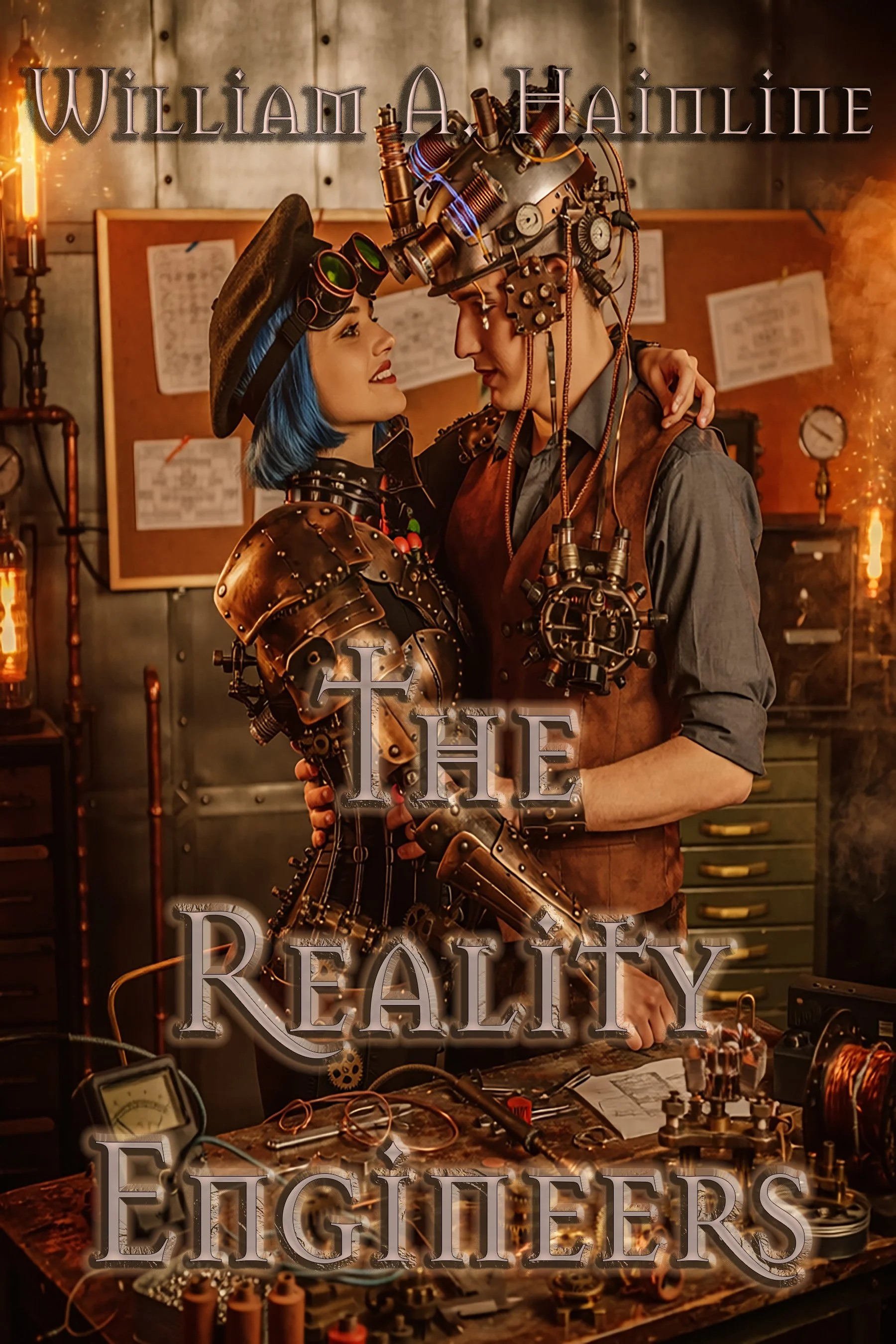
Dizzy Weatherspark has spent most of her life being helped across rooms. The childhood accident that left her legs a crosshatch of scar tissue and surgical reconstruction also left her with a very specific area of expertise: building things that should not work, and then making them work anyway.
The Quantum-Responsive Exoskeleton is her masterpiece — black carbon fiber and copper, neural interface crown, servos that answer to thought. The first test runs for forty-seven glorious seconds before the feedback loop, the fire, and the manual kill switch. But in the wreckage, something unprecedented: Dizzy stands under her own power for the first time since she was eight years old.
Her team calls themselves the Reality Engineers. They probably should have thought harder about that name.
Because Jetta has a guitar built from circuits that fold through extra dimensions, and when she plays it, walls go briefly transparent and light bends in colors that don't exist in the normal human spectrum. Terry has a helmet that floats objects in synchronized orbits and lets him push thoughts outward like radio signals, and to read thoughts as well, though that can be a minor inconvenience or a world-ending nightmare. Misto has an algorithm that rewrites itself in microsecond iterations and breaks military-grade encryption in under thirty seconds, leaving no trace it was ever there.
And somewhere out in the city, something is distorting reality in a blue-purple shimmer that looks exactly like all four of their technologies at once — and a man called Von Wolfenstein, precise and formal and several centuries more patient than anyone has a right to be, is very interested in what they've built.
The technologies were developed separately. When they synchronize for the first time, what they produce together is something none of them designed and all of them can feel. Reality, it turns out, has always been more of a suggestion than a law. The Reality Engineers are about to find out what happens when you start legislating it.
What if the universe runs on code—and you're the one who accidentally compiled it?
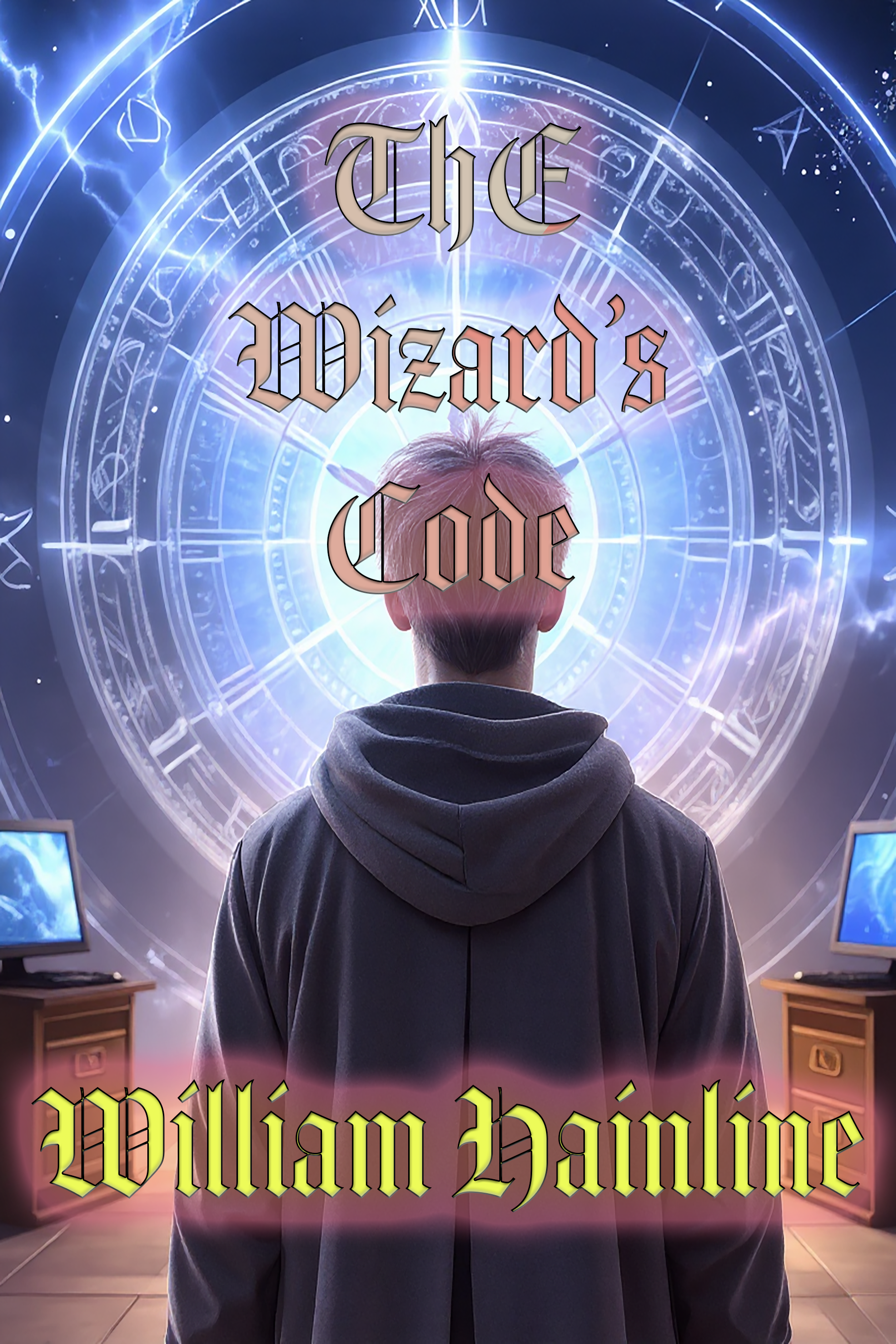
Edgar Winfield is very good at systems. Code systems. Game systems. Systems that behave, eventually, if you stare at them long enough. When he finishes building the Great Dial—a breathtaking piece of clockwork logic meant for a fantasy game—he expects bugs, balance issues, maybe a crash or two.
He does not expect to wake up inside the world the Dial governs.
In Mirrorgone, the Dial is not art. It is infrastructure. It regulates magic, time, and the fragile equilibrium of reality itself—and it is beginning to fail. As fractures spread through the deep mechanics of the world, Edgar is pulled into a conflict between scholars, enforcers, and powers that believe control is the same thing as stability. Armed with nothing but an engineer's mindset and a dangerous talent for understanding how things actually work, Edgar must learn a new kind of programming—one where mistakes don't crash games, they break worlds.
The Wizard's Code is a cerebral fantasy about systems and responsibility, creation and consequence, and what happens when someone who just wanted things to work is forced to decide what kind of world should exist at all.
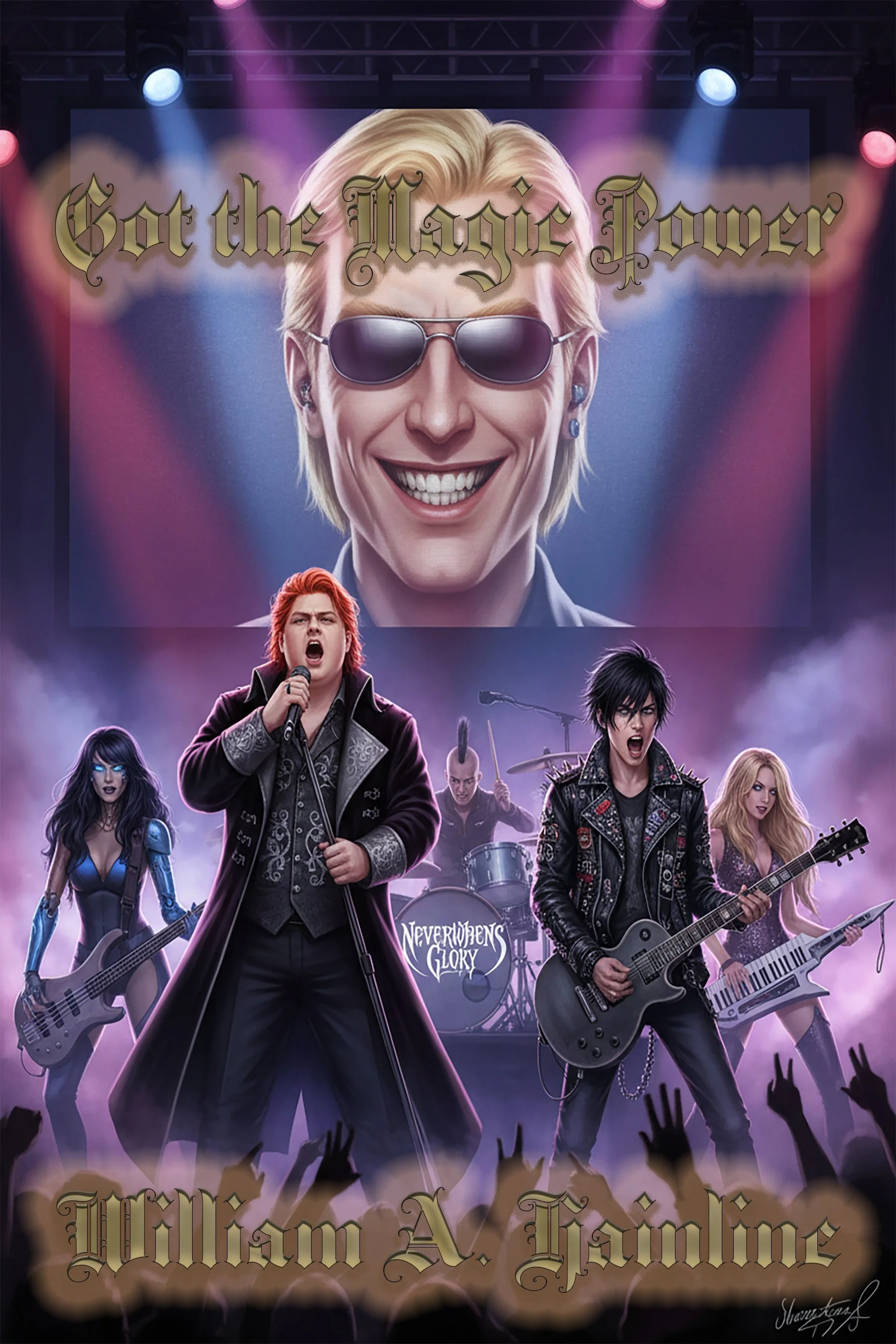
Jamison has a theory about music. Several theories, actually — about resonance, about the multi-dimensional properties of sound when freed from ordinary recording limitations, about why the vinyl record he didn't touch played itself. He has been developing these theories for years, mostly alone, in service of a rock opera that is nearly finished and nearly good and nearly everything he needs it to be.
Then he meets Meatball, who sings gospel like a man conducting a negotiation between heaven and earth, and Olive, who approaches her guitar the way a physicist approaches an experiment — and the three of them accidentally create something in a basement that leaves marks on the walls.
Ralph Solvereign notices. Ralph notices everything. He has been in the music industry for a very long time, longer than the industry has existed in its current form, and what he does with artists is not quite what artists think he does with artists. He doesn't steal music. He harvests it — creativity as raw material, extracted at the source, fed into a crystal dimension that has been hungry for centuries.
He is very good at this. He has an excellent studio, a resonance decoder, and the serene confidence of a man whose plan has been working for a very long time. The Bureau of Sonic Containment has been trying to stop him for most of that time and has not made significant progress.
What Ralph doesn't account for is that Jamison has theories, and Olive has a guitar that does things guitars shouldn't do, and Meatball has a voice that turns out to be something the universe has a specific word for — Lightsinger — and that word has specific implications Ralph is not prepared for.
The music industry has always eaten its artists. Got the Magic Power is about the artists who decide to eat back.
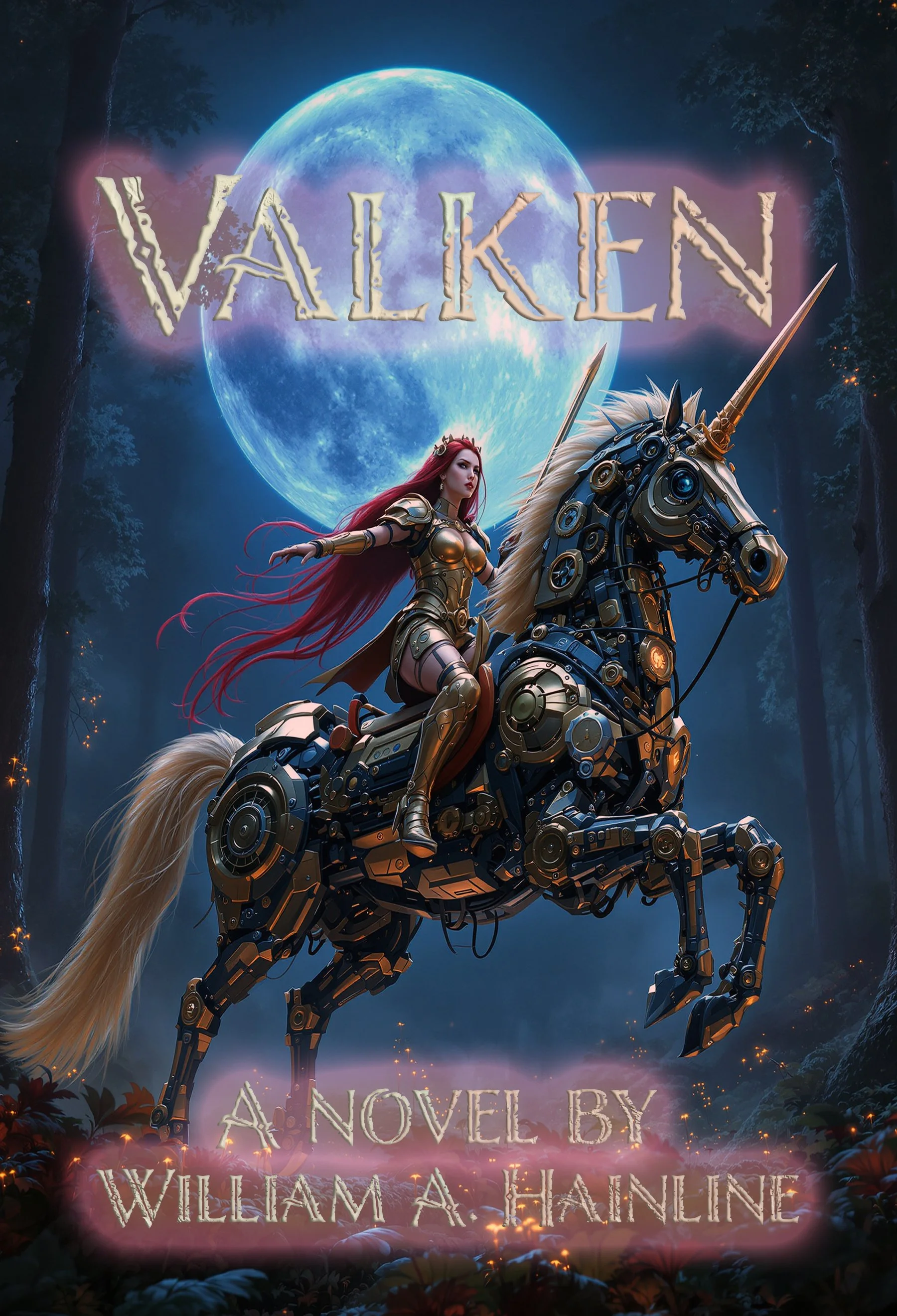
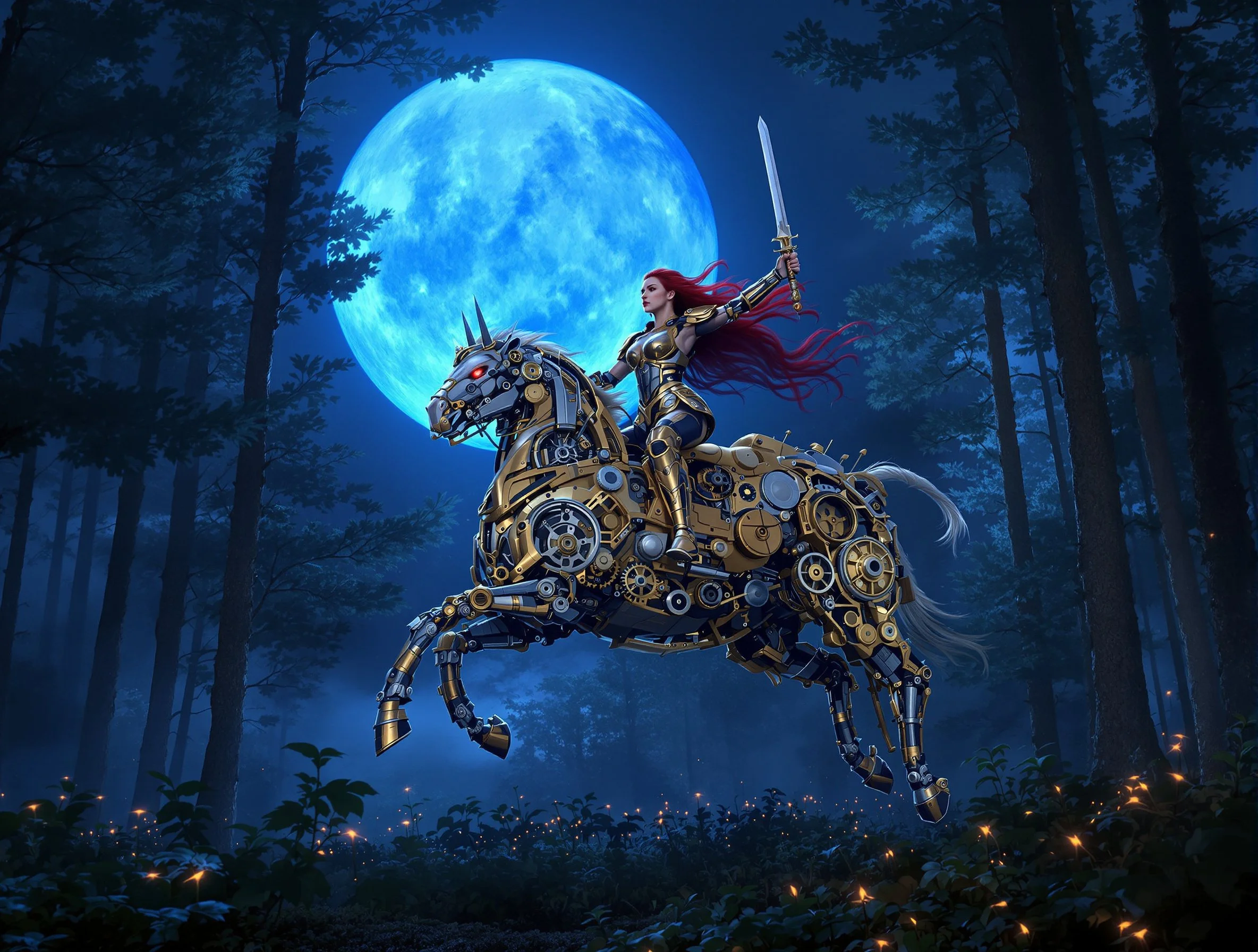
In the kingdom of Avanthia, power is a thing inherited — by kings, by lords, by the ancient Wizards of Thetanonica who have spent centuries perfecting arts that lesser men call magic. Valken has inherited nothing. She is a farmer's daughter, scarred and capable, who has never asked the world for more than a clean sickle and a fair night's work.
Then she finds the spiral in the grain — glowing faintly blue, geometrically perfect, pressed into the moonwheat as though by hands that do not belong to this age — and the world stops being fair.
What follows will take her from the silver fields she has always known to the living stone and crystal towers of Thetanonica, where the Guild of Wizards is fracturing from within, and a Lord in light-swallowing robes is quietly remaking the city in his own image. She will meet a clockwork unicorn with an unsettling grasp of probability. She will touch a Sphere — one of the six arts that govern all things — and feel it touch her back.
She will begin to wonder why the spiral appeared to her, specifically.
She will not like the answer.
Valken is an epic fantasy of inheritance, power, and the danger of being exactly who you were always meant to be.
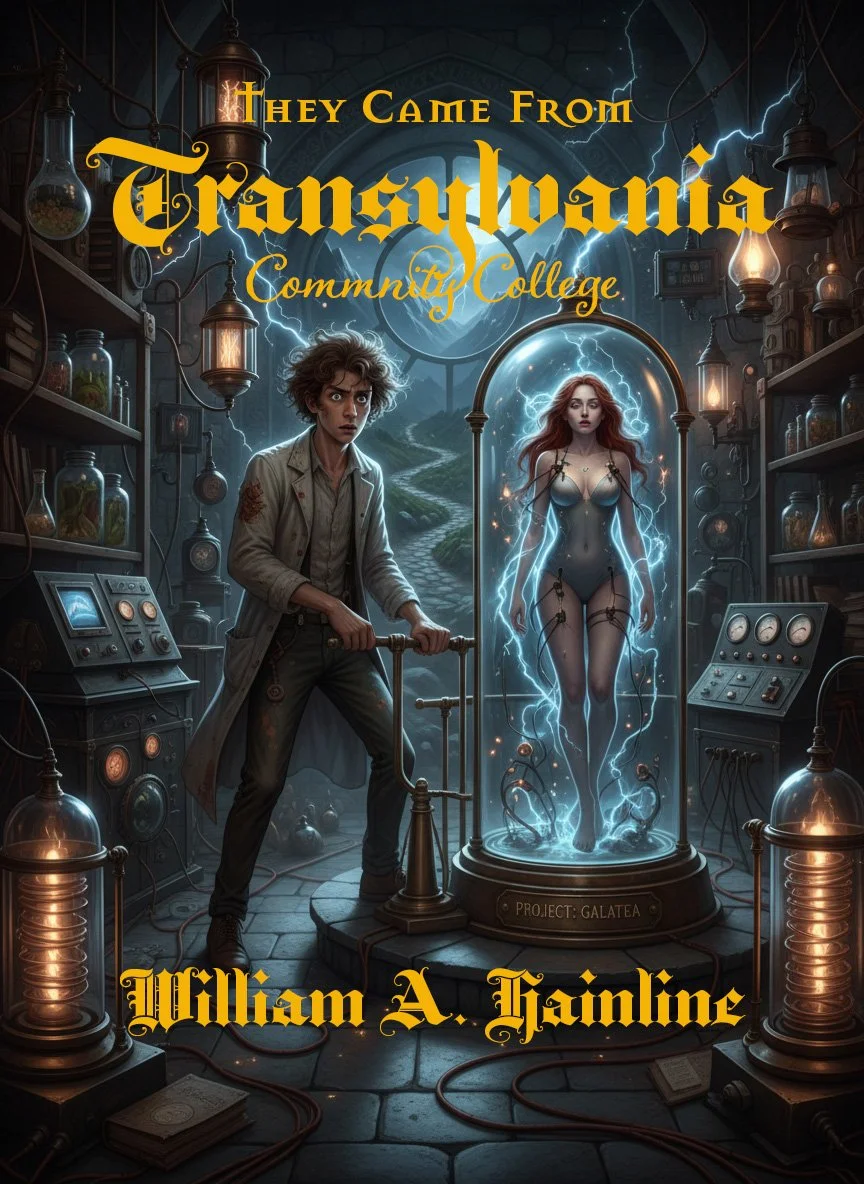
Victor Frankenstein is not doing well.
His girlfriend is dead. He hasn't slept in three weeks. The campus security guard who catches him in the lab after midnight has started leaving him coffee. His friends' texts have reached the point where concern has curdled into something that looks a lot like an intervention.
What Victor has, instead of sleep or food or any healthy coping mechanism, is a plan.
The plan works. This is the problem.
Jenziffer comes back — gold-seamed and luminous and genuinely, recognizably her — but the resurrection tears something open between worlds, and what comes through the gap is Tullamore: a thousand-voiced entity that absorbs souls the way a sponge absorbs water, growing larger and stranger and more human-shaped with every one it takes. It has plans of its own now. It has learned to make its own doors.
Victor has a vampire friend, a girlfriend who can walk between dimensions, a group of increasingly undead allies, and approximately no idea what he's doing at any given moment. Tullamore has centuries of practice and is not particularly worried.
They Came from Transylvania Community College is a gothic horror novel about grief, bad decisions, and the specific kind of love that makes a person stupid enough to do something that shouldn't be possible — and brave enough to deal with what comes next.