
In Defense of Jim Steinman…
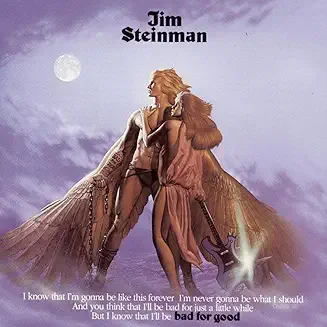
In Defense of Jim Steinman, Who Wrote the Biggest Songs You've Ever Heard and Meant Every Single Word of Them
There is a particular kind of critical dismissal reserved for artists who commit too fully to their vision — who refuse to hedge, to understate, to protect themselves with irony — and Jim Steinman received it for his entire career. The critique, reduced to its essence, goes like this: too much. Too operatic. Too long. Too bombastic. All style, no substance. A gifted melodramatist who mistook volume for meaning.
This critique is wrong in a way I find genuinely instructive, because the people making it have defined "substance" so narrowly that they've accidentally excluded most of Western art from the conversation.
Let's establish the terms. Jim Steinman was a composer, lyricist, and producer who emerged from the Actors and Directors Lab in New York, where he developed Neverland — a rock musical based on Peter Pan that treated adolescence not as a charming phase but as a war, a reckoning, a state of being that the adult world actively conspires to destroy. This was his foundational text. Everything that came after it — the motorcycle as Pegasus, the endless night drives, the love that arrives like a natural disaster and leaves the same way — came from that specific, fully-formed, completely serious artistic vision. The boy who won't grow up is not a cute metaphor in Steinman's hands. It is a tragedy. It is a choice with consequences. It is, if you're paying attention, a fairly sophisticated argument about what we lose when we agree to become reasonable.
The style-versus-substance argument collapses the moment you ask what, exactly, the substance of a Steinman composition is. Take Bat Out of Hell — the song, not the album, though the album too. It is six minutes of a man describing a motorcycle crash in apocalyptic terms that escalate so far past realism they come out the other side into something mythological. The style IS the substance. The excess is not decorating a meaning; the excess IS the meaning. That this is how it feels to be young and reckless and alive and terrified of not being those things forever — that the appropriate artistic register for that feeling is not a tasteful acoustic guitar but a full orchestral rock assault that lasts longer than most people's commutes — is not a failure of proportion. It is proportion. It is exactly the right size for what it is describing.
Steinman understood Wagner. This is not a casual influence — it is a structural one. The Wagnerian leitmotif, the through-composed drama, the idea that music should not illustrate emotion but be emotion at full scale — these are the bones of everything Steinman built. When people say his songs are too big, they are essentially saying that Wagner is too big, that Greek tragedy is too big, that the entire tradition of art that takes human feeling seriously enough to match its actual dimensions is too big. They are welcome to that position. It is a small position, and they are welcome to it.
His range beyond Meat Loaf is the other thing his critics tend to ignore, probably because it complicates the narrative. Bonnie Tyler's Total Eclipse of the Heart is one of the most recognizable songs of the twentieth century — a gothic fever dream about desperate love that somehow became a global phenomenon despite being approximately eight hundred percent more intense than anything else on the radio in 1983. Celine Dion's It's All Coming Back to Me Now is a ten-minute operatic breakup song that went to number one. Sisters of Mercy, Barry Manilow, Pandora's Box — Steinman wrote for everyone, and what he wrote for everyone was, always, enormous and strange and specifically his. There is no mistaking a Steinman composition for anyone else's work. That is not a small achievement. That is the definition of a singular artistic voice.
Now. The political question, and the Meat Loaf question, which are related.
Meat Loaf — born Marvin Lee Aday — was a Trump supporter. He said so publicly and without ambiguity, appeared at events, held positions that were documented and clear. He was a conservative. This is his right, and he is gone now, and I am not interested in relitigating what team he played for. But it matters for this discussion because Meat Loaf and Jim Steinman were frequently conflated by people who forgot that one of them wrote the songs and one of them sang them, and that these are different people with different worldviews.
Steinman's artistic worldview — the one embedded in thirty years of work — is not a conservative one. It is romantic in the nineteenth-century sense, ecstatic, transgressive, deeply invested in outsiders and night creatures and people who refuse the social contract that says you will calm down and grow up and stop feeling things at this volume. His sensibility is carnivalesque, theatrical, queer-adjacent in its embrace of excess and performance and the idea that identity is something you construct and inhabit rather than something assigned and accepted. Neverland is not a story that ends happily for the people who chose normalcy. His work with Pandora's Box — the 1989 album Original Sin — is explicitly about female desire and rage in a way that was not exactly a calling card of cultural conservatism.
I am not putting specific political labels on a man who is not here to confirm or deny them. What I am saying is that the work tells you something, and what it tells you is that Jim Steinman was not Meat Loaf, politically or artistically or in any other sense, and that treating them as interchangeable because one sang the other's songs is a category error of the first order.
Steinman died in April 2021. The Bat Out of Hell musical, which opened in the West End and on Broadway and toured internationally, is his theatrical legacy made fully explicit — a show that is deliberately, joyfully, operatically too much, and is beloved for exactly that reason by audiences who understand that "too much" is sometimes the only honest answer.
He was not all style. He was all feeling, which is different, and harder, and considerably more valuable.
The people who called him shallow were listening with the wrong part of themselves.
In Defense of Zack Snyder…
This in Defense of Zack Snyder, Who Does Not Need My Defense but Is Getting It Anyway
Let me tell you about a filmmaker who has been confidently misread for twenty years by people who watched his movies with the sound on and the brain off.
His name is Zack Snyder, and the internet has opinions about him the way a beehive has opinions about someone poking it with a stick — loudly, collectively, and with a complete absence of nuance.
I would like to offer some nuance.
Let's start with Sucker Punch, because it is the one his critics most love to hold up as evidence of everything wrong with him, and they are wrong about it in a way that is almost impressively complete. The standard critique goes like this: the film is exploitative, hypersexualizes its female characters, and is basically a teenage boy's power fantasy dressed up in the language of empowerment. This critique has been repeated so many times it has calcified into received wisdom.
Here is what the film is actually doing: Sucker Punch is a trap. The villains — the orderly Blue Jones, the corrupt figures who populate Babydoll's fantasy layers — are not there to be cool. They are there to be recognized. They are the leering, entitled, ownership-minded men who appear in the real world every day, transposed into genre clothing so you can see them clearly. The hypersexualized imagery is not an endorsement; it is an indictment. Snyder has said this in interviews, repeatedly and clearly, and has been ignored repeatedly and completely, which is itself a fairly elegant demonstration of his point. The male gaze is being put on trial in that film. The fact that some viewers showed up to ogle rather than reckon with themselves is not a failure of the movie. It is the movie working exactly as designed. If you go to see this and you’re eating it up as a dissertation on why feminism is just “wrong,” that’s what Snyder wanted you to do, and it proves you are a misogynistic pig.
Snyder is not an advocate of violence against women. He is not an advocate of the mistreatment of women. He is a filmmaker who keeps making films about what happens to women — and men, and societies — when power goes unexamined, and he keeps getting criticized for depicting the thing he is criticizing, which suggests the critics are not always watching the same film I am.
Now. The DC films. Ahem.
Man of Steel is a film about an alien who grew up in Kansas trying to figure out whether humanity deserves saving, and arrives at yes, but not cheaply. The destruction of Metropolis at the end is not spectacle for its own sake — it is the cost of the answer. People died. A god-level being fought another god-level being in a city full of humans, and the film does not let you forget that. This was read as Snyder being irresponsible. I would argue it was Snyder being honest about what that fight would actually look like, in a genre that had spent decades pretending otherwise.
Batman v Superman is a mess and also a masterpiece, which sounds contradictory until you realize that those two things are not mutually exclusive. The Theatrical Cut is a mess. The Ultimate Cut is something else — a film about the corrupting nature of fear, about what happens when symbols become untethered from the values they represent, about two men who are each other's worst nightmare and the manipulator who figured out how to weaponize that. It is not a fun movie. It was not trying to be a fun movie. It was trying to be a serious movie, in a genre that is deeply ambivalent about being taken seriously, and it paid the price for that ambition in review scores and thinkpieces.
Zack Snyder's Justice League — the four-hour version that exists because enough people cared enough to demand it — is the clearest argument for his rehabilitation; he was really, really trying to make the biggest, most mythological-scale comic book film he could.. Given the resources and the runtime and the creative control, he made something that is operatic, patient, strange, and genuinely moving. It is a film that earns its ending. Whether you think it earns its runtime is a fair debate. Whether it represents the vision of a filmmaker who cares about his characters and his themes? Not really debatable, if you watch it with your full attention.
This is a genuinely interesting case study in how runtime can serve a film rather than bloat it.
The core reason it works is that the four hours aren't padded — they're what the story actually needed. The theatrical cut was famously butchered down to two hours by the studio after Snyder left following a family tragedy, with Joss Whedon completing it. That version had to compress six characters' worth of origin and motivation into a runtime that couldn't support them. Cyborg in particular was gutted — his arc went from thematic centerpiece to a handful of disconnected scenes. The Snyder Cut restores him as the emotional heart of the film, and suddenly the whole thing has a spine.
A few specific things that make the length feel earned rather than indulgent:
The chapter structure helps enormously. Snyder divides the film into titled sections, which gives the audience psychological permission to settle in. It feels more like a prestige miniseries than a movie that won't end — you always have a sense of where you are in the shape of the story.
The aspect ratio (4:3, shot for IMAX) is unusual for home viewing but gives it a distinct visual identity that signals "this is something different." It's a small thing that has a large subconscious effect on how seriously you take what you're watching.
The villain, Steppenwolf, actually has a coherent motivation in this version. He's not just a CGI threat — he's a disgraced general trying to reclaim honor. That context makes the action meaningful rather than arbitrary.
And Snyder's visual language, love it or hate it, is consistent and committed. The film has a genuine aesthetic point of view — mythological in scale, operatic in tone — which my theatrical background probably resonates with. It's essentially Wagnerian in structure: long, loud, and uncompromising about what it is. It says to you: I’m not your typical superhero drama! Hell, I’m not even sure what I am, but I REALLY REALLY mean it, goddamn it!
The honest caveat is that it still has fat that a tighter editor might have trimmed. But the emotional payoff of the Cyborg resurrection scene, which lands almost entirely because of the restored runtime, makes a strong argument that sometimes the long version is sometimes the right version.
Here is what Snyder actually is, stripped of the internet's preferred narrative: he is a maximalist. He thinks in images the way some people think in words — the slow-motion sequences, the chiaroscuro compositions, the mythological scale — and he applies that visual language to material that is almost always, underneath the surface, about power and responsibility and the cost of both. He is not subtle. Subtlety is not his instrument. But the lack of subtlety is not the same as the lack of thought, and it is past time we stopped treating them as synonymous.
You may not like his films. That's fine. There is room in the world for people who prefer their superhero movies lighter and their directors less operatically inclined. But the critique that Snyder is a purveyor of empty spectacle, that he doesn't care about women or people or meaning — that critique is wrong, and it has always been wrong, and I am tired of watching it go uncontested. So I’m here to beg to differ.
The man made a film where the villain is the male gaze and critics responded by accusing him of having one. I don’t buy that malarky. And neither should you. Dislike his films all you want; but please quit trying to frame it as “I’m concerned about this,” because what you’re really doing is called dismissal, and that’s what our society does to artists that, in their shallow-minded opinion, just have imaginations too big to be contained by ideology.
Welcome to the Middle of Knowhere

WELCOME! I am your host, the magnificent William A. Hainline, author of science fiction and fantasy extraordinaire. I’ve been building this site slowly but surely here in my web-design lair. Muwhahaha. Abandon all hope ye who enter here! All shall love me and despair! And GODDAMN IT, DADDY— YOU KNOW I LOVE YOU! — BUT YOU GOTTA HELLUVA LOT TO LEARN ABOUT ROCK ‘N ROLL!
I write novels that don't quite fit in one box, which is either a feature or a bug depending on who you ask.
I live in Southern Indiana with my cat, who has opinions about my writing schedule and expresses them primarily by sitting on the keyboard during the good parts. I studied English, Computer Science, and the arcane interdisciplinary field known as Fucking Around at Indiana University Southeast, and I have spent the subsequent decade-plus combining all three in approximately equal measure.
The result is five novels.
There's The Wizards Code, which is epic fantasy for people who've ever looked at a magic system and thought: wait, but what are the actual rules. Then there’s Valken, another rich epic fantasy, but of an altogether different vibe. There's The Reality Engineers, about four university students who built impossible technology in a basement and accidentally became the most dangerous team on the planet. There's Got the Magic Power, a dark comedy about a band who discovers that the music industry has been literally harvesting human creativity for a crystal dimension, and decides to do something about it. And there's They Came from Transylvania Community College, which is a gothic horror novel about grief, resurrection, and the specific category of bad decision that starts with love and ends with an ancient interdimensional predator loose between worlds.
I said they don't fit in one box. I meant it.
I write the kind of fiction I wanted to find and couldn't always — stories that take their ideas seriously without taking themselves too seriously, with characters who are smart and scared and funny and occasionally on fire. The books are published through Amazon and Draft2Digital, and I am findable and moderately sociable on Facebook if you want to follow along, argue about genre fiction, or simply watch someone try to finish five manuscripts before the cat destroys the keyboard entirely.
Welcome. Pull up a chair. The coffee's on.